Being a Haitian Minister in the Methodist Church in Britain
Black History Month
23 October 2025
23 October 2025
From a Haitian perspective, why is it significant to mark Black History Month? The Revd Dr Marcus Torchon, Chair of the Bristol Methodist District, offers personal reflections on being a Haitian minister in the Methodist Church in Britain.
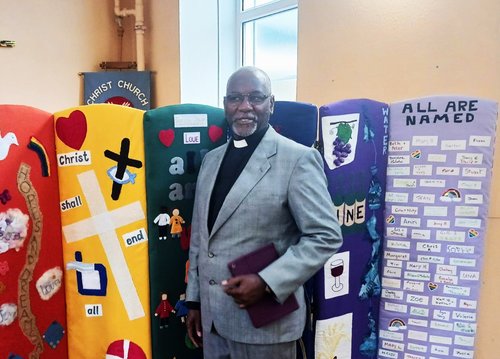
Over the years, I have depicted my beloved Haiti as the suffering servant nation. Haitians suffered so that people of African ancestry may cherish the costly benefit of freedom and resolve to never let this slip away. Born out of the suffering of the 1791 Haitian Revolution, Haiti — the author of the first successful revolt of enslaved Africans and the birthplace of the world’s first Black republic — symbolizes divine defiance against oppression. Yet, centuries later, my people still wrestle with new chains of poverty, corruption, and marginalization.
To commemorate Black History Month is to remember that freedom is not a finished product, it is an ongoing fight. Haiti reminds the global African community that liberation, which Haiti’s independence symbolizes, must be preserved. Today, as my Haitian people struggle for justice, dignity, and peace, they solicit our solidarity.
As a minister in the MCB, I valued the ministries of British Methodist missionaries to Haiti, Rev James Catts and Rev John Brown (in the early 1800s), Rev Lord Leslie Griffiths and Rev Alan Bidnell, and Sharon and John Harbottle (most recently) for their distinctive contributions. They began and solidified the Wesleyan witness and heritage in preaching the Gospel and enacting it through social holiness. In the economy of gratitude, I have therefore been delighted to help to re-imagine the worth of such a heritage. In this heritage, John Wesley urged Methodists to abstain from consuming sugar (produced mostly in St. Domingue/Haiti), a mercantile tool of slavery. In the same heritage, I lay claim on the merit to embody the voice of Haitians to advocate for an end to indiscriminate food-aid which contributes to undermining the sustainability of Haitian farming. It is reassuring to give meaning in this way to partnership between MCB and the Methodist Church in Haiti.
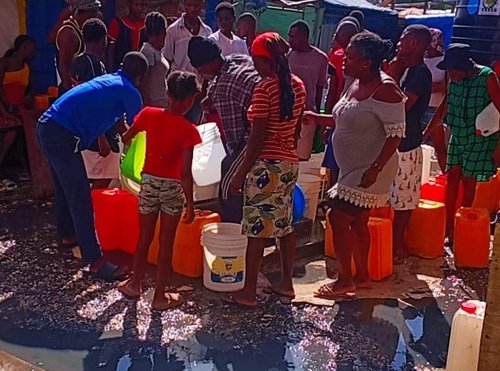
What are the issues in Haiti and how did they come about?
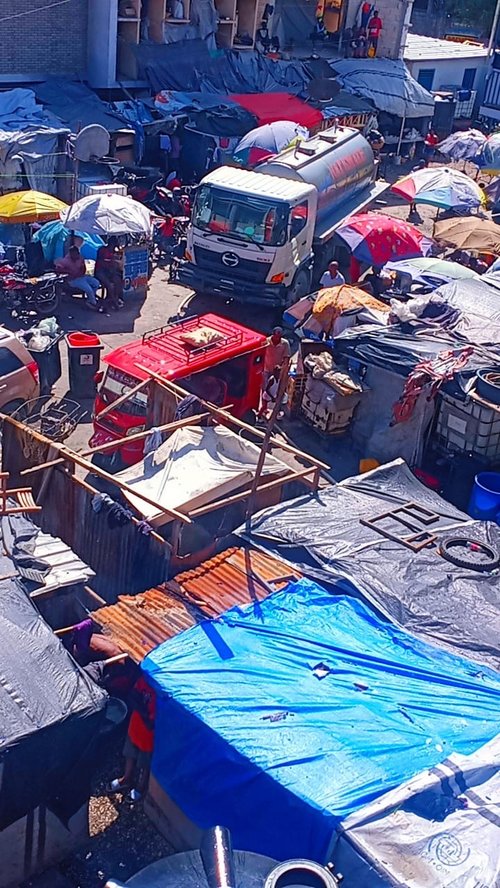
The gang culture has besieged the capital, made life unlivable and severely affected the workflows of social institutions, schools, learning centres, churches, and surgeries, in agonising contexts of terror. From many accounts, insecurity becomes rampant and therefore heightens the level of food poverty, gang-led raids, migration from urban and suburban communities. As the socio-economic fabric of Haiti has been on the brink of collapsing, schools, community halls, church buildings, and makeshift villages have become homes, in crowded circumstances, to millions, in the capital.
This resulted from the devastating effects of a gang culture, a silence trigger, sustained by sophisticated firearms and ammunitions imported and distributed without restraint. For years, ill-advised political groups, in their competitive craving for power, set up gangs and intensified distributions of weapons at an unprecedented pace. As such, it appears that the police have little or no means to resist the assaults of the gang culture and therefore the trend goes unrelentingly.
What impact this has had on the Methodist Church in Haiti and what is it doing about the situation.
The chronic insecurity affects the work and witness of the Methodist Church. The social holiness role of the church is questioned but is not abandoned. However, the Church is finding it increasingly difficult to support those in need, lacking in financial resources, exposed to unbridled insecurity. Methodist churches, surgeries, and schools in areas controlled by gangs, are closed, destroyed or burned down. The main Church in the capital has been vandalized. The Nouveau College Bird, established by the Rev Mark Bird, a British missionary, rebuilt after the deadly earthquake in 2010, has been closed. The Church and the community it serves continue to suffer, with no light of change being yet spotted, but the wind of hope does not cease to blow, propelled by faith. On this black history month, what is ours to do alongside the Methodist Church in Haiti.
The Haitian Church has been embodying the voice of resistance to evil and joining Christ to set His people free. While the gang culture makes in roads and adversely affects people’s activism, the Church is re-imagining its mission to initiate and fund educational workshops to improve social and civic responsibilities of Haitian citizens. I wonder how the Methodist Church in Haiti can rely on its supporters to achieve this re-imagined mission.
Where do you see hope and where do you see God in this?
Hope in Haiti is not naïve—it is radical faith in motion. It is the drumbeat of resurrection in the face of ruin. God is present in the mothers who still feed their children from empty cupboards, in the ministers who preach under threat, and in the youth who choose peace instead of joining a gang.
Haiti’s history has shown that military interventions have not been the preferred exit solution from socio-political insecurity. If the transnational community knows as much who made the weapons which are terrorising the population, they are as capable of stopping at bay their distributions. This will have a less devastating effect than sending armed forces. Further, integral to this initiative, NGOs, alongside their projects of preference, may join in a coordinated and collective plan to help to rehabilitate the youth, steeped in the gang culture.
God’s Spirit stirs in the vision of a new Haiti—where borders are secured, weapons are silenced, and young people are empowered to rebuild their nation. The MCB can help make this vision by partnering with Haitian leaders, supporting youth rehabilitation programmes, and pressing global leaders to end the unchecked flow of arms.
Why we should pray for Haiti / connecting it into why it is important for our discipleship as Methodists to 'think globally', notice what God is doing in the world and respond
To pray for Haiti is to live out our calling as global disciples—to see Christ in the suffering and act in love. Our prayers are not empty words; they are the seeds of justice. As Methodists, we are stewards of a faith that changes lives, societies, and nations.
Join us in prayer for:
Like the prophet Jeremiah who bought a field in faith while his nation was burning, we, too, must believe that God’s promise still holds. Haiti’s story is not over. The same God who broke the chains of slavery will again lift this nation from the ashes.
Let us rise in prayer. Let us give. Let us advocate. And let us remember—to honour Haiti is to honour the divine spark of freedom that God places in every human soul.
Do you want to continue praying for Haiti? Starting 12 January 2026, on the 16th anniversary of the 2010 Haiti earthquake, we will be releasing a series of six short films featuring Haitians sharing their personal experiences of today’s crisis. These films are an invitation to listen, learn and pray for Haiti. For more information go to Voices for Haiti - The Methodist Church.