Black History Month in Troubled Times
07 October 2025
07 October 2025
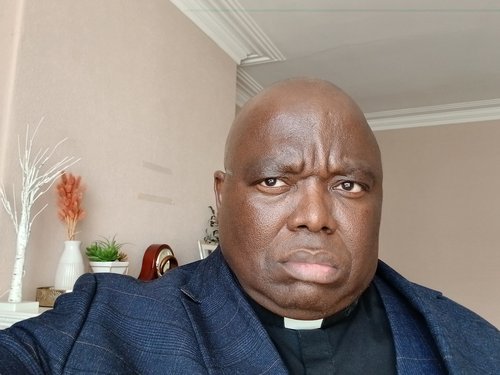
The Revd Dr Vincent Jambawo is Co-chair of the Belonging Together Ministers Group, which celebrated its 40th anniversary this year. Last week we shared a prayer from Vincent to mark the start of Black History Month.
Here, Vincent explores the importance of the month as the world and our country become increasingly divided and troubled.
We begin October with the horizons of our world etched in dark clouds of conflict and ears burning hot from careless political rhetoric that divides and alienates. We are perplexed by the capacity and desire of those in power to harm and destroy. We are saddened by the willingness of ordinary men and women to legitimise the ways of the warmongers and the purveyors of hate.
In the UK and across the globe, the socio-political landscape is increasingly fractious, and neighbourhoods feel unsafe for many dark-skinned people. The echoes of far-right violence, anti-migrant protests, and openly racialised scapegoating reverberate incessantly and insolently, leaving in their wake swirls of unresolved trauma and indelible cuts of pain and hurt. Internationally, the UK navigates a multipolar world fraught with geopolitical tension — from the war in Ukraine to the humanitarian crisis in Gaza. Defence spending rises, while public services strain under austerity’s lingering shadow
Mistrust, anger, and fear threaten to engulf communities that could easily be loving and caring. Populist demagoguery, amplified by social media disinformation and political opportunism, is the new norm, spewing into our peaceful streets like blighted smoke. For many black people, this violent and uncouth social disorder in the streets of civilised, inclusive Britain is simply the manifestation of things they had already become aware of from instinct, wrought by years of slavery and discrimination. Many would have sensed the hostility well before these disturbing manifestations, which we all thought were being confined to the dustbins of uncomfortable history: the microaggressions, the false dichotomies, the apples-oranges comparisons, the curled lips, raised eyebrows, the rabblerousing insidiously creeping into “organised” discourse, the dehumanising constructs, the appeal to predestination … all are the tell-tale signs and harbingers of an era of expedience, victimisation. And all will have been felt before the first slave was taken, before the first village was displaced. Such are the times.
Successive governments promise to reverse years of democratic erosion and institutional neglect. Yet, cautious approaches and continued use of surveillance and protest restrictions are indicators of the commitment to justice and reform. Ultimately, the reward of the anti-immigration vote is too big to ignore. At that point, no price is too high. How else can we explain the conflation of sensible border controls with the rabid anti-migration sentiment that is now shouting unashamedly from the rooftops of our multicultural, multidimensional Britain? Alas, for now, there is one plumb line, and that yardstick has no respect for love, compassion, generosity, diversity and inclusion. Is this the reality we want for ourselves and for our children and their children’s children? No!
Amid this turbulence of conflicting sentiments and equivocal trajectories, Black History Month 2025 emerges as a beacon of resilience and remembrance. The theme, “Standing Firm in Power and Pride,” is not just a slogan — it is a call to action, a declaration of identity, and a celebration of legacy. It celebrates iconic moments in Black History that have had profound cultural, political, and social impact across the world. These moments across centuries and continents highlight resilience, resistance, and achievement.
It remembers the first enslaved Africans arriving in Jamestown, Virginia, and the Haitian Revolution against slavery. We honour Jackie Robinson, who broke the colour barrier in Major League Baseball, Rosa Parks, who refused to give up her seat, and Martin Luther King Jr., who dreamt of a non-racialised world, the Civil Rights Act outlawing segregation and discrimination, Tommie Smith and John Carlos raised their fists in a Black Power salute at the Olympics, Nelson Mandela released from prison after 27 years. It gives thanks for Barack Obama being elected President of the United States, the Black Lives Matter movement founded after the acquittal of Trayvon Martin’s killer and Global protests following the murder of George Floyd.
Black History Month honours the 60th anniversary of the Race Relations Act, the memory of Malcolm X, and the lives of Paul Stephenson and Lord Herman Ouseley, giants whose footsteps carved paths of justice and dignity. It reminds us of the Fifth Pan-African Congress and its enduring call for liberation and unity. Yes, Black History Month is the season for the times, the antidote to the reutilisation of our universal values and principles of justice and fairness, hope, faith and love.
In October, we recall the extraordinary history of Africa (the home of every human being, irrespective of the perceived shade of their skin colour) “engrossing narratives of warrior queens, kings, chiefs, priests and priestesses; of mighty civilisations blooming on the banks of rivers or in the shade of sacred mountains; of lavish buildings hewn out of rock, exquisite libraries bursting with discovery, bustling caravan routes and market squares thick with voices of traders, travellers, farmers and entertainers." (Zeinab Badawi 2024)