Challenging the Rise of the Far right
Our role as Methodists
16 September 2025
16 September 2025
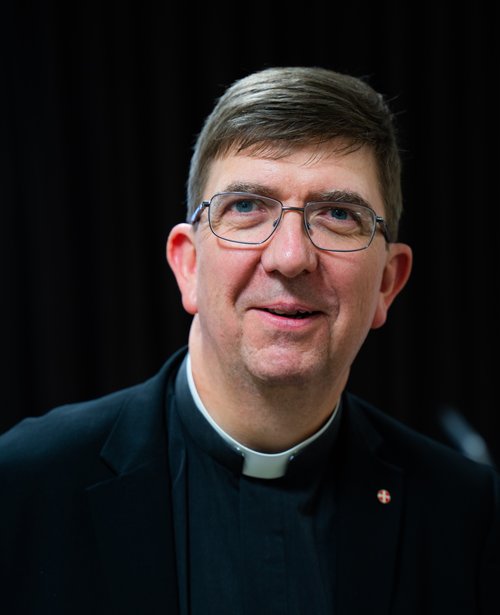
Following last weekend's protests in London, the recent disorder outside the accommodation of those seeking asylum and the 'Raise the Colours' campaign, the Revd Jonathan Hustler shares this vital blog on how the Methodist Church can challenge the growing sense of intimidation across communities and the perceived injustices behind it.
It was Saturday 13 September. My wife and I had been in London to have lunch with our family, and were travelling home on the train. I was reading a novel, Daphne du Maurier’s The King’s General. The story is set in the English Civil War of the 1640s and du Maurier expresses with pathos what it felt like to be caught up in that conflict. I had reached the chapter in which decisive battles had been fought (spoiler alert: the Royalists lost). Du Maurier describes characters who realise late that the battle has been not just between two parties wanting power but between two incompatible understandings of what English society should be; the strength of her writing is such that the sense of loss and desperation of the vanquished is almost palpable, as is the feeling of alienation when the characters find themselves living in a society shaped by a very different set of values from those which they have held.
Then I started to wonder if what I was feeling came from the words on the page before me or from elsewhere. Amongst the many other passengers on the train were some who had clearly been on a demonstration held in the centre of the capital, the so-called ‘Unite the Kingdom’ rally. There was something triumphalist about the tone of their comments and their demeanour; they clearly felt that they had done a good day’s work. I overheard one demonstrator whose clothes were festooned with the cross of St George tell her companion that the scale of the protest meant that it could not be ignored; "They will have to do something now." Who "they" are and what "something" is were not explicit.
From what I saw from news reports and gleaned from other snippets, at least some those who claimed to be ‘uniting the kingdom’ are motivated by a set of values which are not merely different from those which I (and the Methodist Church) affirm but are diametrically opposite to what I (and the Methodist Church) believe. I am privileged to serve a Church that has emphatically proclaimed itself to be inclusive and justice-seeking, which believes that it has been called into being to proclaim that God’s love is indiscriminate and unbounded, and which seeks to become a sign of God’s reign from which no one is excluded and in which no one is devalued.
Over the last few years, the Conference has made a number of decisions to reiterate that. We adopted our strategy for Justice, Dignity and Solidarity, giving us concrete measures to make our churches welcoming and inclusive places. The training that has been rolled out as part of that has for some been about unlearning the biases with which we were formed in earlier generations. The culture of my own youth was infected by multiple forms of prejudice and is not a world to which I now want to return. Sadly, I think some of those carrying flags that Saturday in London do want to go back there.
Sadly, also, in making their case they requisition Christian symbols as if the correct response to people of other religions is to weaponise the things of our faith against them. In a church that sees diversity as gift rather than challenge, a generous response to those of other faith and a desire to engage in dialogue are signs not of weakness but of strength. The antipathy to other religions that is apparent in some parts of Britain today is perhaps an instinctive, perhaps even an understandable, reaction to difference, particularly in the wake of global conflicts which have in part been informed by religious extremism, but it is based on a narrow view of God’s purposes. The Christian faith that the Methodist Church has taught me is based on a much broader interpretation of those purposes, one which is open to receiving and learning from those other faiths whilst at the same time holding fast to the unique significance of God’s saving acts in Christ. That is what we are promoting through our evangelism and growth strategy.
Suspicion of other faiths has gone hand in hand with hostility towards migrants, especially to the putative refugees from conflict. Again, such hostility has no place in Methodist thinking. When the Conference adopted the Justice-seeking church report in 2023, it identified five priorities, one of which was justice for refugees and asylum seekers. The Conference in Telford this year conferred about that priority. We heard stories from those who came to these shores seeking asylum and from churches whose lives have been enriched by welcoming refugees. Some of the material that informed that debate and other resources are available on the Methodist Church website. I hope that they are widely read and widely shared. The statistics undermine the false narratives that dominate our news media at the moment but, more pertinently, the stories move us beyond the data to the challenge of truly seeing people as people, made in the image of God and loved to the uttermost by their maker.
As are the people who rallied in Trafalgar Square and part of my response to God’s love has to be to ask why they are protesting. Behind the assertions of patriotism and views about immigration there is often a sense that they are or they represent the victims of economic injustice and that the communities from which they come have been deprived of resources and opportunity. As a Church, we have been active in trying to address the needs of those communities. Our associations with food banks and other forms of emergency support have offered help to those in need. Our voluntary-controlled schools and academies are often in places of deprivation. Our strategy to support Church on the Margins has targeted connexional resources into projects that are designed to reach those who feel excluded. One of the foci of JPIT’s work has been to campaign with others to end child poverty. Again, there are stories to be shared on our website.
Accounts of the numbers at the rally in London that day vary, but most estimates are something over 100,000. That is about the same as the number of members of the Methodist Church in Britain. I was worried that afternoon on the train by the attitudes I saw displayed and the falsehoods that were being repeated, but I cannot despair because I serve a Church whose calling is to respond to the love of God in Christ. If the woman on the train was right, and 100,000-plus people listening to hate-mongers and spouting nonsense can make a difference, how much more can 100,000-plus people who listen to the gospel and speak words of grace change things for the better?