I Fought the Law
21 August 2025
21 August 2025
‘I fought the law’ (ITV Aug 31, 9.00pm) is a four-part drama based on real life campaigner and bereaved mother Ann Ming - played by Sheridan Smith. Ann successfully lobbied at the highest level of Government to change the Double Jeopardy Law and ensure that her daughter Julie’s murderer was convicted.
Mark Braithwaite, who features in the drama, was a Detective Sergeant at the time of the 1989 murder and is a member of the Methodist Church.
He played a key role in supporting the Mings throughout their ordeal and subsequent campaign, rising to the ranks of Detective Chief Superintendent by the time of his retirement.
His ongoing commitment to the family, investigating the crime and personally and professionally supporting the campaign he says is rooted in his faith, with the Christian principles of justice, truth and compassion, formed over many active years in the Methodist Church.
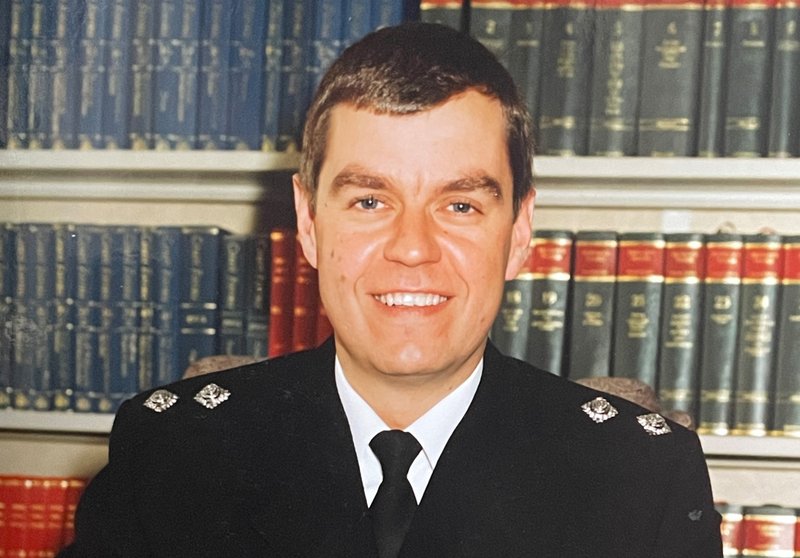
"the values emphasised in Methodism... align closely with the principles I upheld throughout my career as a police officer."
There have been a number of documentaries on the case as Ann Ming’s campaign led to a seismic change in English law when the 2003 Criminal Justice Act allowed for retrials in certain cases involving serious offences.
Julie’s murderer was finally convicted in 2006, after confessing while serving time for an unrelated crime. He believed he could not be prosecuted again for her murder, having previously been tried and acquitted.
Mark’s rule for any media involvement has always been: if the family isn’t involved, he won’t take part—out of respect for their grief. On this occasion Ann and Charlie Ming (Julie’s mum and dad) proactively asked for his help and he was happy to give it.
He had a one-to-one meeting with the actor playing his role in ‘I fought the law’ and after meeting the whole cast on set he felt reassured the true story was being faithfully told. He said the cast “were gracious and respectful” when he met them.
Mark had stayed in touch with the family over many years, and though retired, continued to support Ann, especially during parole hearings. He says his connection to the case endures out of a sense of personal obligation and Christian compassion, not professional duty.
He was first introduced to the Christian faith, through his parents, who were Baptists. Mark and his wife were married in a Methodist church, 41 years ago, in Middlesbrough where he was baptised and has been a committed member ever since.
Today, he volunteers as chair of the regional safeguarding group for the Newcastle and Darlington Methodist districts and also serves as the circuit safeguarding advisor, a role that draws on his policing background and related experience.
“My church life means a great deal to me. I find that many of the values emphasised in Methodism—and in Church life more broadly—such as forgiveness, truth, fairness, care for others and the pursuit of justice, have always resonated deeply with me. They align closely with the principles I upheld throughout my career as a police officer.”
Julie Hogg went missing in November 1989; Ann Ming contacted the police convinced something had happened to her daughter who had failed to return home having not turned up to a solicitor’s appointment to commence separation proceedings from her estranged husband, leaving her three-year-old son Kevin with his grandmother.
Forensic investigators searched Julie’s house for days, then it was sealed and left empty over the winter. When it was re-occupied by Julie’s estranged husband and their son, a terrible smell emerged after the heating was turned on and Ann, who had medical experience, recognized the smell and discovered Julie’s decomposing body hidden behind the bathtub.
This was February 1990 and Mark was brought on to the case both as part of the investigation team and then as the family liaison officer.
A local man from Billingham was charged with Julie’s murder. Two trials were held, but both juries couldn’t reach a verdict and the judge acquitted the accused after the second trial.
While serving time for another offence, he admitted to killing Julie and later confirmed it in a formal interview. He was then charged with two counts of perjury for giving false evidence during both trials.
He pleaded guilty and was sentenced to six years imprisonment on both counts. Mark explained that, for Ann, this was an unbearable injustice, a travesty she refused to accept.
Her view was that the killer had murdered her daughter, yet the ancient law of Double Jeopardy shielded him from being tried again. This sense of injustice compounded with grief drove her campaign for change.
She met with top Government officials including Home Secretaries Jack Straw and David Blunkett. She even addressed a House of Lords commission.
"Ann ran an unbelievable campaign to change the law. She spoke to anybody and everybody who would listen, anyone who was in a position to influence it."
Mark describes her as a plain-speaking person, who didn’t back down, ultimately Parliament changed the 800-year-old Double Jeopardy law.
The reform allowed retrials if new and compelling evidence emerged and if it was in the public interest to prosecute again. The change was applied retrospectively, opening the door for justice in historic cases, including the murder of Julie Hogg.
The relevant parts of the change in the law through the 2003 Criminal Justice Act came into effect in 2005 and Dunlop was convicted of Julie’s murder in 2006. By then, Mark, had risen to Detective Chief Superintendent – Head of Crime for Cleveland Police - and oversaw the final trial. Dunlop pleaded guilty to murdering Julie and was sentenced to life imprisonment, with a minimum term of 17 years before he could be considered for parole (he remains in the secure prison estate).
“Ann ran an unbelievable campaign to change the law. She spoke to anybody and everybody who would listen, anyone who was in a position to influence it. I don't think many people realize the huge significance of what she achieved, which has helped other families including Stephen Lawrence’s. For my part, it's an investigation I carried for the best part of 18 years of my 32-year police career. It has been a huge privilege to journey with the family,” says Mark.
While he is very clear that his job as a police officer was to investigate the crime and present the evidence through prosecuting counsel, this has gone hand in hand with his deep commitment to truth, fairness and compassion for other people.
His support for the Mings was unwavering. He describes this, along with the pursuit of justice, as the bedrock of faith. “As a police officer, it’s rare you get as the opportunity, the privilege to carry a case such as this and to carry it through in the way that I was able to do, some people said you should write a book. I said, well, maybe I should, but it's Ann’s story – not mine, I’ve just played a supporting role” reflects Mark.
After the change in law and conviction, Ann did write a book ‘For the love of Julie’ and was awarded an MBE for her services to criminal justice, presented by Prince Charles, now King Charles III.