Serving as a Black African minister in the diaspora in the United Kingdom
17 October 2025
17 October 2025
Revd Joseph Kwallah is a minister in the Goole and Selby Circuit. In this blog for Black History Month, Joseph shares his personal journey in the Methodist Church in Britain, as a black person in diaspora.
Who is Kwallah J? (aka Vicar DJ). Born and raised in Kenya, East Africa, by parents from two distinct ethnic groups: a Maasai father and a Kikuyu mother. English is my fourth language and, before I utter or pen down any word in English, there is an enormous transition that goes on because I think in my Father’s language, Maasai, understand in my mother’s language, Kikuyu, translate that in Swahili, Kenya national language and pen or project the words in English, save to say I am in Yorkshire and grappling with the dialect!
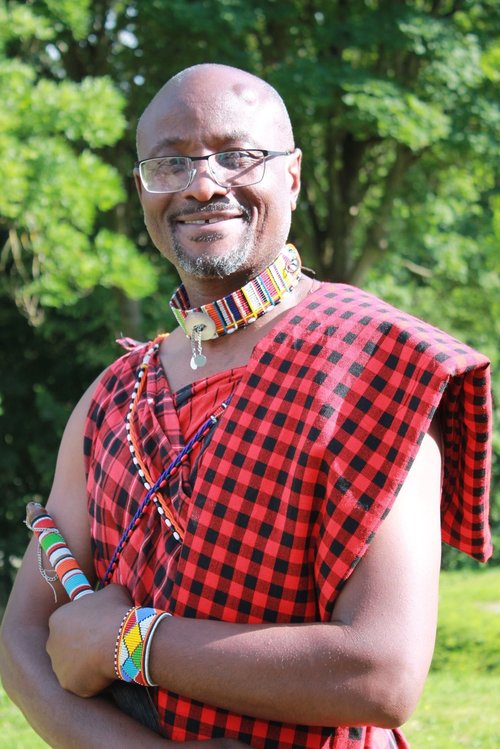
Black History Month is a significant time to acknowledge, honour, and share the contributions that Black people have made to the fabric of religion and life in general. As part of our story, we continue the legacy left by those who came before us, singing their song as well as our own.
The purpose of this blog is to share my personal journey in the Methodist Church in Britain, as a black person in diaspora, as well as acknowledging that each one of us has a personal calling, a story to tell and perhaps a song to sing (and a dance!).
I first felt called to the ministry while managing a resort in Kenya, where we established a fellowship for staff and workers along the south coast beach in Diani, Mombasa. Since I lacked biblical training, I decided to move to the UK so that I could work and pursue further studies. I had originally intended to study and return to Kenya to continue serving in the ministry, but I was challenged to rethink my focus, and I settled where I felt I was most needed, here in the UK.
"If not me, who else?" was one of the messages in Wetherby Methodist Church that nudged me to explore the ministry in the church and, in response, I offered to be trained as a worship leader, a local preacher, and presbyteral ministry formation. In the African context, seniors pass on the baton to the juniors, and therefore, I felt obliged to take on the mantle of serving in the ministry.
The turning point in this journey was when the Connexion, Yorkshire North and East District, and Tadcaster Circuit committees all unanimously agreed that I should move forward to presbyteral ministry formation. This sparked a more introspective process of self-examination and occasionally self-doubt.
In order to make my ministry relevant, my initial task was to embrace British culture and become conscious of how my African culture has influenced and shaped my theology. Although there are occasions when the two cultures collide, I have opted to accept this paradoxical reality. As an outsider and insider, Abraham's cycle has served as a reflection tool for me as I continue to vacillate between Kenya and the UK.
Two quotes from the sage that I hold dearly are: one from a minister in my sending church in Wetherby: "Never allow yourself to be anglicised; God has called you as Joseph," and two, from my portfolio mentor; "Be yourself and carry through who you are, who God has made, your culture and Who God has called you to be "
It goes without saying that I am different in many ways as a black minister in the Methodist Church, and I view these characteristics as a gift from God to the areas I serve. I entered full ministry at a later age, and attempting to cover a lot of ground before the "setting of the sun" can be risky. I have, however, adopted John Mark Comer's advice in "The Ruthless Elimination of Hurry" to maintain my spiritual and emotional well-being amidst the turmoil of the contemporary world. 'Pole pole', as it is known in Swahili.
My personal KWALLAH'S quadrilateral—culture, music, running, and scripture—has become the foundation of my vocation. From running a marathon in a cassock to participating in parkrun, my other pulpit. Running is one of my gifts for interacting with others, and people who wouldn't often attend church had some fascinating talks when I ran a marathon in a cassock while playing loud gospel reggae.
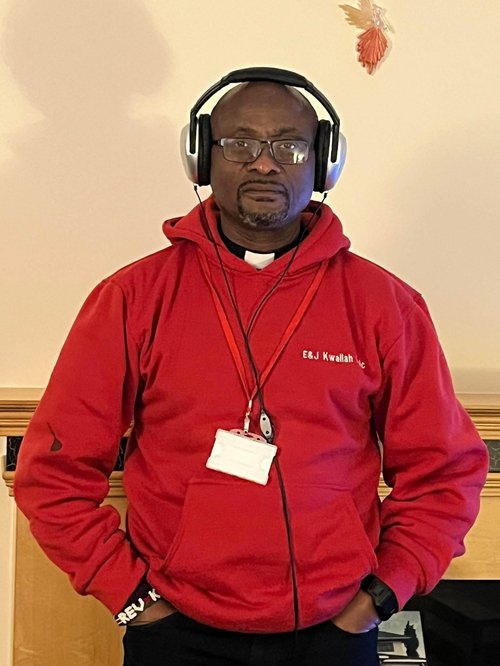
And did I forget Holy Grooves! One of the many ways that people of African origin express their spirituality is through music, and therefore I love loud good music, yes, loud, crank up the volume, but being mindful not to annoy my neighbours. I am always fascinated by the reactions of audiences when they see a man wearing a clerical collar as a DJ. What can go wrong when a minister is mixing Holy Ghost Shuffle with some Maasai dance moves? Another door in the ministry that challenges the status quo and perception that ministers are weird. My DJing is exclusively for schools and charities, and it's an avenue for me to connect with people who might not otherwise enter a church, break down boundaries, and spread the gospel.
It is a blessing to be serving in the church that has given me an opportunity to be myself and has taken huge strides to be more inclusive. The fact that in recent times we have seen more black people trained for ordained ministry is a true reflection and recognition of the importance of inclusivity. In the past, some potential ministerial candidates chose not to offer their call to be tested for fear of being turned down because of their origin, and I must confess, I was there too. However, the trajectory is evolving, and the Methodist Church in the UK is leading in diversity in Britain, if not Europe.
Amani ya Mungu iwe nanyi
(Peace of the Lord be upon you).