Continuing a legacy of 100 years of mission with people experiencing homelessness and deprivation in Bristol
26 November 2025
26 November 2025
What we did?
Bristol and South Gloucestershire Circuit worked with community partners to set up a new Charitable Incorporated Organisation (CIO) to continue the missional use of a Methodist Building. The building was leased undervalue to the CIO.
Background
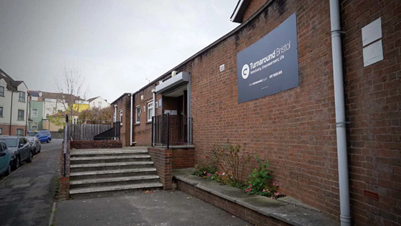
The Bristol Methodist Centre (BMC) was founded in 1985, serving as a vital support hub for people experiencing homelessness and as a continuation of the homelessness outreach work originated at Bristol Central Hall in the 1920s. In November 2015, it moved into a former Methodist church. This new location offered expanded facilities, including a larger day room, private meeting spaces, and amenities such as showers and laundry services, enabling enhanced support services for the homeless community.
BMC provided support for people experiencing homelessness by offering food, washing and laundry facilities, IT help and a range of advice and sign-posting services. Staff at the centre were employed by the Circuit with around 60-70 guests accessing the centre on any given day. BMC occupied an important place in the wider ecology of support for those experiencing homelessness in Bristol, and had been part of Methodist outreach in the city in various buildings since 1924.
Prior to 2015, BMC was based at Methodist premises in Midland Road, which had served those on the margins of society for many years and was financed by the Bristol District. In 2015, Midland Rd was sold, the centre relocated to Lincoln Street and responsibility for managing and financing the project transferred to the Bristol and South Gloucestershire Circuit. At the time, the District used £250k from the proceeds of the sale of Midland Rd to convert Lincoln Street into a suitable venue for BMC. The remaining funds from the sale of Midland Rd were ring-fenced to support BMC until 2019, when it was envisaged that the project would become self-supporting through donations.
Why we did it?
The Bristol Methodist Centre (BMC) was previous overseen by the local circuit who were the Managing Trustees.
In the period before the decision to set up a new charitable organisation, an important issue was the challenge of offering suitable and sufficient oversight for the work of the centre, including line management, communications and fundraising. Fresh eyes and energy were both needed
In parallel to this, although substantial sums were raised through regular giving and other donations, the centre still ran at a substantial operating deficit which needed support from the circuit, approximately £80,000 annually. By 2022 there was a need to review the future of BMC as it was clear that the circuit could not offer the level of support required to offset the annual deficit of BMC.
A working group, involving circuit staff and representatives from other charities involved with people experiencing homelessness in Bristol, was set up to review the operation. This group reported to the Circuit Meeting in June 2023 with proposals for the future of the work of the centre, including the possibility of closure or setting up a new charity, separate from the circuit, which would also enable applications for new sources of funding. This last option was agreed.
Increased donations allowed the work to continue into 2024 while preparations for the change were made, supplemented by approximately £50K of government funds and some much smaller grants. There was also much better communication with supporters and prayerful support as a result of the process and accompanying engagement.
How we did it?
The new charity called Turnaround Bristol was set up as a CIO. A Charitable Incorporated Organisation (CIO) is a legal structure for charities in England and Wales that is regulated by the Charity Commission. It offers charities the benefits of being a corporate body, such as limited liability for trustees, without the need for separate registration with Companies House. The CIO is a structure specifically designed for charities to incorporate and is regulated solely by the Charity Commission.
The objectives of Turnaround Bristol were written so that they are similar, but not the same, as of those of the Methodist Church. This was done to enable the circuit to support the new charity, including applying to the Methodist Council to lease for less than market rent ‘undervalue’ using Model Trust 20. The Circuit nominated a number of Trustees to serve on the board of Turnaround Bristol: currently two, the intention being to have approximately 1/3 of the board with Methodist connections.
Model Trust 20 allows Methodist Council to give permission for undervalue sales and leases in specific circumstances if it would further the calling of the Methodist Church.
To lead the transfer to the new charity, an implementation group was formed with representatives from around the circuit, others with specific expertise (e.g. HR, fundraising), a representative from a local charity (inHope) working in the same sector, and an "independent voice" from the wider Christian community of Bristol.
How long did it take?
Once the decision was made to set up a new charity and lease the building to them (Summer 2023) around two years.
The setting up on for the new CIO took around nine months. The agreement of lease terms and the application to Methodist Council to lease under market value to the charity took approximately two years (in parallel) . We feel the process could have been shorter, and hope that learning from this will help others working with CIOs.
How did we find the right partners to help us?
Largely personal contacts in the wider Christian community around Bristol.
Church members in, or previously in, the Circuit with specific skills (HR, fundraising)
On matter of nominating Trustees for the new Charity with Methodist connections - via District Synod (for one), Circuit volunteer (for another).
Who were our Key Consultants?
How much did it cost
Direct Legal fees £10,000
Surveyors fees paid (valuations and detailed condition survey) £2,500
These costs were paid by the circuit
Turnaround Bristol’s legal support was largely provided pro bono, similarly their own surveyor’s representation.
What were the challenges?
Negotiating the financials for the lease - expectation from new charity that this would be free - but Model Trust arrangements don't support that, despite underlying desire to want to see the new charity succeed. Trustees did agree to an under market value lease to help the new charity with its start up.
Getting permission from TMCP for the Circuit to continue to oversee the two churches (of other denominations) which use the building at weekends (this needed separate application to Connexional Council)
Dealing in the lease with the physical alterations the new charity wanted to do to the building. The charity has an ambition to create accommodation on the site for the homeless., something which was part of the mandate agreed by the Circuit Meeting when the new charity was established.
The time it took for the lease to be agreed and the required permissions to be obtained.
What are the key learning points?
With thanks to Revd Patrick Stonehewer for providing the information for the case study. If your church or circuit is interested in working with CIOs to lease or sell a building to, please email property@methodistchurch.org.uk to book an online call with a property development manager to discuss.