Black History Month- Remembering Walter Tull
The first ever Black British Army officer and footballer for Tottenham Hotspur and Northampton Town grew up in one of Action for Children’s former homes
22 October 2026
Black History Month- Remembering Walter Tull
22 October 2026
As part of Black History Month, we are looking at the incredible life of Walter Tull – the first ever Black British Army officer and footballer for Tottenham Hotspur and Northampton Town – who grew up in one of Action for Children’s former homes in Bethnal Green around 1900.
Born in Folkestone near Dover in 1888, Walter was the son of Barbadian carpenter Daniel Tull and British woman Alice Elizabeth Palmer. His paternal grandfather was an enslaved person in Barbados.
Walter, and his bother Edward, faced early tragedy when their mother Alice died of cancer in 1895. His father remarried but died just two years later.
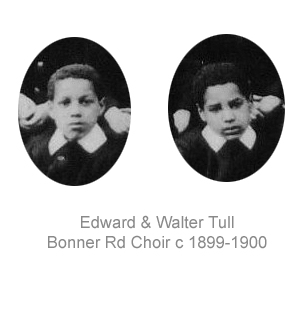
Their stepmother couldn’t cope with five children, and it was recommended that the two boys should be sent to the Methodist Children's Home and Orphanage, founded and run by Methodist minister Thomas Bowman Stephenson, in London’s East End.
This home formed the roots of what was later to become the National Children’s Home in 1908, the forerunner of Methodist partner charity Action for Children.
Edward was later adopted by Glasgow’s Warnock family and qualified as Britain’s first mixed-heritage dentist.
Walter discovered his talent for football and began playing with nearby club Clapton FC where he was part of the side that won the FA Amateur Cup in 1909 – a competition for amateur clubs at the time.
The same year, at the age of 21, Walter signed to Tottenham Hotspur and became one of the very first Black players in the professional game. After a spell at Spurs, Walter moved to Northampton Town, where he made more than 100 appearances.
But all was to change dramatically for the young footballer with the outbreak of the First World War in 1914.
Walter joined one of the popular ‘Pals Battalions’, which were often comprised of friends or workmates in neighbourhoods, factories and mines across Britain.
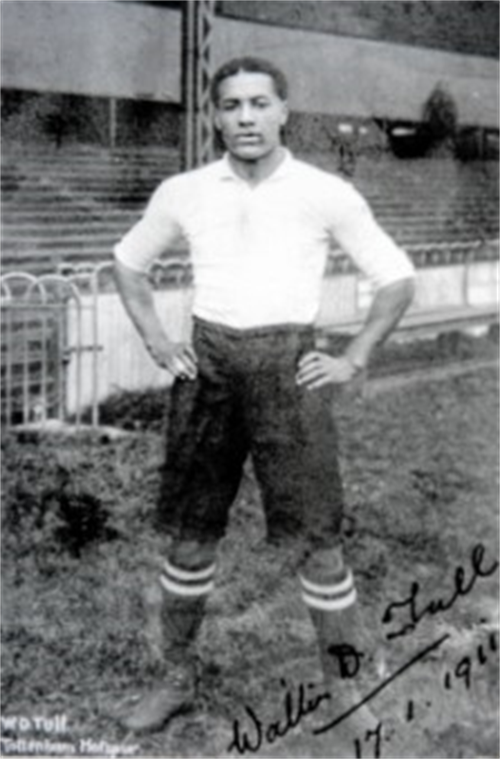
After enlisting in the Footballers' Battalion of the Middlesex Regiment, he saw the horrors of the trenches in many battles, including the Somme in 1916, where he served as a sergeant.
He rose rapidly through the ranks and was promoted to Second Lieutenant in May the following year, making him the first Black officer in the history of the British Army.
Walter served on the Italian Front from November 1917 to March 1918, where he was praised for his ‘gallantry and coolness’ after leading 26 men on a night raid into enemy territory.
Tragically, in the war’s final year, he returned to France and was killed in action near the village of Favreuil in the Pas-de-Calais, aged just 29.
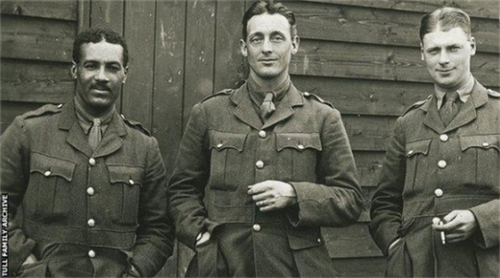
His body was never recovered.
The legacy of Walter Tull has lived on more than a century after his death on the Western Front, and he is commemorated with numerous memorials throughout the UK, including a garden next to Northampton Town's stadium.
Action for Children continues to remember him with the Walter Tull award, which recognises those who champion equality, diversity and inclusion across the charity.