“Blessed are the Peacemakers"
02 September 2026
“Blessed are the Peacemakers"
02 September 2026
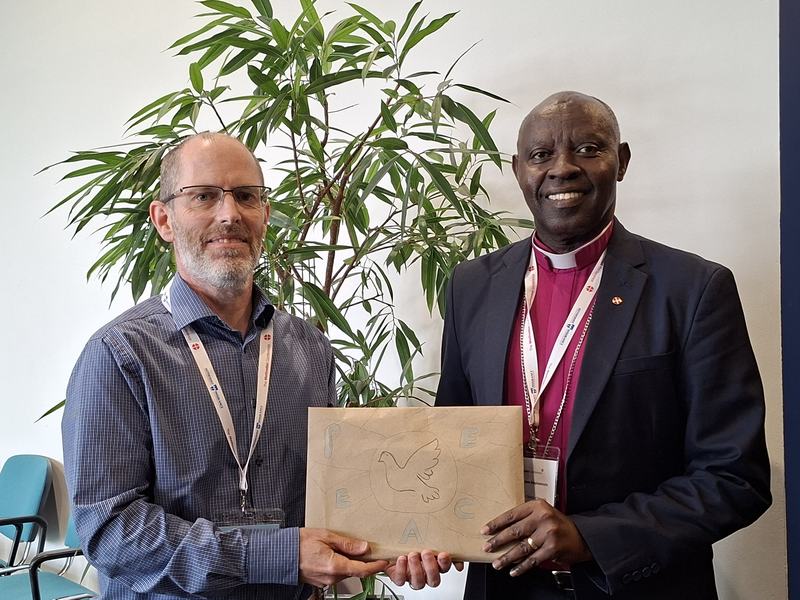
Bishop Samuel Kayinamura of the Free Methodist Church in Rwanda shares his testimony of how, after the trauma of the Rwandan genocide, God’s love led him to be a peacemaker in his Church and nation.
He attended the Methodist Conference in the summer, where Conference members conferred on him the Justice Priority of peacemaking and he led the Conference in praying for peace.
He returned to his country with messages and prayers of peace for his church members, written by members of the Conference.
Now he recounts his story which is one of peace, forgiveness and reconciliation, with God very much at the centre.
I come from a little, remote village in Western Rwanda where I lived until I was 30 when, in 1994, genocide broke out in Rwanda, killing my parents, siblings and relatives.
My wife, our 9-month-old along with my younger sister survived. We escaped, helped by generous people at their own risks. We went separately and miraculously found each other in Democratic Republic of Congo. Such a relief and a blessing to be together and safe though it was a miserable time in a foreign land with almost nothing.
In July 1994, the genocide was stopped by Rwanda Patriotic forces, and we made our way back to Rwanda. A devastating period when I discovered nearly all my family had been killed, our houses and belongings destroyed. It left me deeply traumatised. I was sick with anger, bitterness and revenge, but I had a strong sense of calling to serve God full-time as a pastor. So, I pursued theological studies whilst still carrying trauma and a wounded heart.
I then faced a personal crisis as I read Mathew 18:21–35 in which Jesus answered Peter’s question about “how many times” he should forgive someone – “seven times?” Jesus had responded, no, “seventy-seven times”. But he also reminded Peter – how could he expect God to forgive his sins if he was unwilling to forgive the sins of others?
I was also challenged by the words of the Lord’s Prayer "Forgive us our debts, as we also have forgiven our debtors." (Matthew 6:12)
I asked myself how I could pray such a prayer whilst holding hatred. My wife and I felt we had to intentionally return to our home village to extend forgiveness to the families of those who killed ours and destroyed our belongings. We had to learn for ourselves the vital importance of unlimited forgiveness in our spiritual lives, but also for the reconciliation of our community.
I learnt forgiveness is a vital part of our spiritual journey. It didn’t mean that the murderers were not to be held to account for their crimes, but my forgiveness released me from the desire for revenge, and from bitterness in my heart; so many people had suffered. I felt such compassion for them. They were like sheep without a shepherd, lost not knowing which way to turn.
How could I pastor them whilst still holding on to my own resentment and bitterness, whilst seeking revenge? It was hard to forgive but it is possible. The Bible gives examples. It didn’t come easily, but forgiveness is a tremendous power of healing and reconciliation.
We formed a group called Inshuti Nyanshuti (Friend in need, friend indeed) to bring together survivors of the genocide against the Tutsi and those who hid them. The idea was to help everyone come to terms with what had happened through the same process of learning to forgive as we had gone through, whilst working together. I have had to learn the tremendous power of healing and reconciliation through forgiveness.
When we forgive others and seek the Lord’s forgiveness for our sins, we obey God; and open the door to a special relationship with him and each other. When we forgive, we become peacemakers. A heart that has been forgiven learns how to forgive.
I felt privileged to be invited to the 2026 British Methodist Conference and be part of a workshop on peace with Partner Churches, District Chairs and the Warden of the Diaconal Order. We were each asked to choose a picture that represented peace for us. I picked a picture of the Cross. My mind took me back to my survivor story and how I came to forgive. For a Christian, the Cross is the centre of faith and brings reconciliation and peace (Colossians 1:20). Because of the Cross we are no longer enemies (Ephesians 2:14).
Looking at the Cross, I hear the voice of God telling me “I love you, so I ask you to love your neighbour, even your enemy. I forgave you so I ask you to forgive others as peacemakers.” We have to teach others to be at peace with God and each other.
After the Conference, it was special to take postcards home with me containing your prayers and messages of peace. They have made a huge impact. We plan to circulate them to all our churches, encouraging them to seek peace and pursue it in the home, at church, at work and in the community.
What the world needs are peacemakers. Let us choose the road of peace and build instead of break, heal instead of hurt. Blessed are the peacemakers for they shall be called children of God.
Prince of Peace, King of Compassion,
you call your people into holiness of heart
and life and send us to be signs of your reconciling love in the world.
We pray for lands like Rwanda, where deep wounds still shape the present
and where the hills remember the cries of the past.
Let your Spirit breathe healing into hidden trauma;
let forgiveness become a daily practice,
and let reconciliation grow into a way of life.
Teach hearts to trust again, to rebuild community from what was once torn apart,
and to find courage in grace where silence once carried unbearable weight.
We pray for places like Gaza, Lebanon and Iran,
where conflict tightens its grip and hope feels fragile.
Let your peace fall like rain on dry land; soften the dust of despair;
shield the innocent; steady the hands of all who long to build rather than destroy.
May hope rise in the cracks left by violence,
and may compassion become the language that outlives the sound of war.
God of justice and mercy, hold close those who mourn,
strengthen those who fear, and inspire those who dare to dream
of a society healed by your grace, where dignity is shared,
where justice is lived, and where peace becomes
not a distant wish but a Spirit‑filled reality.
In Christ, our Peace and our Hope.
Amen.
Bishop Samuel Kayinamura