Charles: language, heritage and reparations
24 April 2025
24 April 2025
Charles Forsdick is Professor of French, and Co-Chair of the Faculty of Modern and Medieval Languages and Linguistics at the University of Cambridge. Charles is also a member of the Methodist Heritage Committee and chairs the Archives and Records Advisory Group for the Church. He is also one of those working to co-ordinate how the Church should consider reparations for slavery.
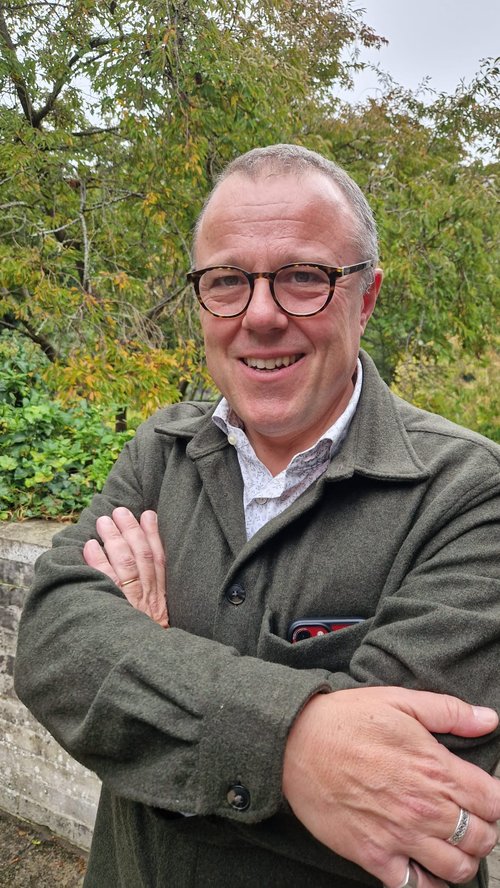
Charles has been involved in Methodism since the age of eight. “After my father died, I started attending Trinity Methodist Church in East Dereham with my mother and my stepfather. The welcome and care we received there were transformational at a challenging time in our lives.”
The Methodist Church remained a constant during Charles’ time as a student in Oxford and Lancaster, then as a lecturer in Glasgow and Liverpool.
"I see the study and teaching of languages and cultures as a vocation. My approach to this work is informed by careful ethical engagement, with a focus on equality and social justice issues. My interest in those areas has directed me towards research around colonial history and working on the legacies of enslavement. Therefore, it is very important for me to be part of a justice-seeking Church.
"I'm a member of the Heritage Committee for the Methodist Church, but one of main areas of contribution is work of the Reparations Advisory Group, with whom I’ve been invited to share wider perspectives drawing on my research, teaching and wider public engagement.
"When I started as a lecturer in 1995 in Glasgow, I felt that Higher Education was still an environment where, as academics, we would not regularly talk about our faith. I believe things have changed considerably since then as a result of a greater awareness of and sensitivity to multiple faith traditions within our universities. I seek to approach every encounter and decision in my life in a prayerful way. When you're facing dilemmas and when decisions are not straightforward, for me seeking God’s discernment and wisdom is essential.
"In previous congregations, I have offered skills that were needed at different times. At Partick Methodist Church in Glasgow, I would spend my Saturdays doing the garden in front of the church and having some of the most fantastic conversations with passers-by. Now I have the opportunity to deploy a different set of skills, which I hope is useful.
"It’s important for me to be in a congregation with a breadth and diversity of members, providing an opportunity to worship alongside others from different professions and backgrounds.
"It was only last summer, at the age of 56, that I became a Church member. I'm married to a Methodist minister, but being received into membership always seemed like a significant step to take. Castle Street welcomed me when I moved to Cambridge, and I think that was the signal to begin thinking seriously about membership, about taking the next step and making that commitment."