Pride Against Prejudice
Holding the Line in 2026
07 August 2026
07 August 2026
Pride is a street party that grew out of a protest. It is a welcome extended to everyone; it is out, integrated in community and can be barrier breaking. But this year has felt different. Social media moderators are hiding comments that hark back to the bad old days. There are cuts to funding and even occasionally intimidation that goes unchallenged by authorities. This year, Pride has often felt like it is, at best, holding the line for rights and acceptance rather than advancing them.
Despite the challenges, those churches who celebrate Pride, and the Methodists who attend the events, are still sharing the powerful message that All Are Welcome.
Here, four Methodists consider what Pride means in 2026.
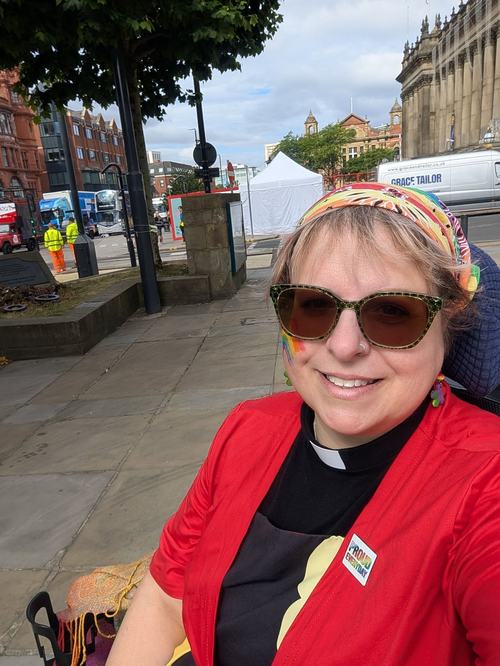
The Revd Mo Onyett is a Methodist minister serving in the Leeds South & West Methodist Circuit, she is also part of an ecumenical team coordinating Pride Church Leeds, which is an LGBTQ+ inclusive monthly gathering for worship and fellowship meeting at Leeds Minster. Some of the leaders, like her, are part of the LGBTQ+ community.
As a bi woman, I've attended Pride events with the Methodist Church for quite a number of years now, and I've always felt safe there, and safe to be myself. This year, something has changed.
There's a growing sense of anger and frustration in society, which is being expressed as fear of certain minority groups, with those groups even being blamed for society's problems. On our Pride Church Leeds social media channels, we've seen unprecedented levels of negative comments following our celebration service and attendance at Leeds Pride. Each year, we expect some people to leave comments expressing deeply held theological views that they feel prevent them from supporting Pride. However, this year there have been more comments of that nature, many of which have been hurtful. Some comments have amounted to hate speech, to such an extent that they have had to be reported to the police.
Personally, in response to photos of this year's Pride march, I have been called a "fake Rev" and "not a woman of God". Some colleagues have faced similar comments. As a disabled person and wheelchair user, I am already a target for negative comments and even hate speech because of rhetoric that portrays disability benefits as a cause of the country's economic problems.
It is tempting to stop attending events and to be less open about who I am, but I believe God called me to ordained ministry just as I am. He called me to minister to all, especially those who have felt excluded by the Church or by society because of their sexuality, gender expression, or disability.
There is a need for Christians to continue challenging hate with love, and an even greater need to show solidarity with all who are vulnerable.
The Revd Jason McMahon-Riley is Minister at Nuthall Methodist and attended Nottingham Pride with a group from his church alongside Christians at Pride Nottingham.
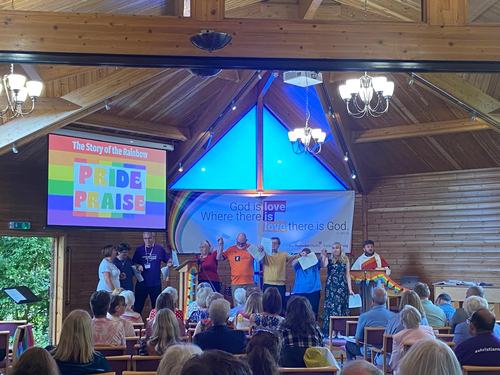
"While there has been significant progress in law and society, many LGBTQIA+ people continue to experience discrimination, abuse and exclusion simply because of who they are. Recent increases in hostile rhetoric, online abuse and threats towards Pride events remind us that visibility and solidarity still matter.
“Supporting Pride can be an expression of our calling to love our neighbour and to stand alongside those who experience marginalisation. Churches that participate do so not to celebrate perfection but to proclaim God's inclusive love, to listen to people's stories and to offer hope. Our presence says to those who have been hurt by the Church that they are seen, valued and welcomed, while also challenging prejudice wherever it is found.
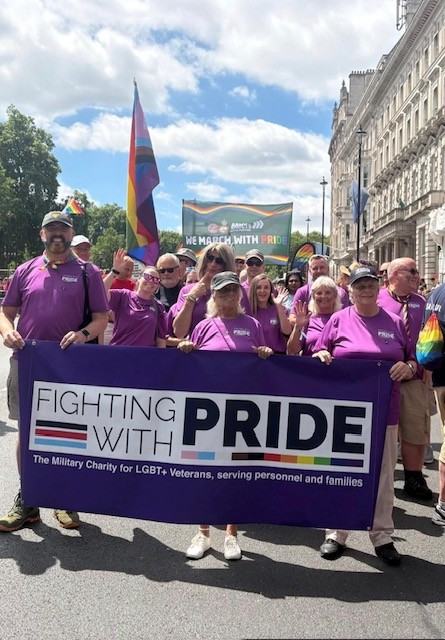
Jenny attended her first Pride back in 2022, having come out in later life. For her, a gay local preacher and a military veteran, it wasn't until Pride 2026 that she could feel fully liberated after decades of hiding her true self. She shares why Pride is vital to the millions who attend each year and why this year was special for her in particular.
“Taking part in Pride marches is very important to me; it encompasses validation, affirmation and visibility. 2026 was a special year when, for the first time, I marched with Fighting with Pride as a LGBTQ military veteran in London Pride. For decades, I hid my sexuality, serving in the Royal Air Force during the ban. To walk with other LGBTQ military veterans who had suffered traumatic victimisation was powerful and moving and I felt at last my military service validated. Having come out to mainly positive reactions, I still know, read and hear the negative comments of those who do not accept me.
“Pride is about celebrating how far the LGBTQ community has come, but knowing there is still much to do, as hate and judgement is ever present sadly still in some of our Church communities. It is a greater sadness that people still hide their true selves in our churches for fear of being condemned and treated badly and, until that changes, Pride will always be needed. But for me, each year at Pride, I experience validation, affirmation and can unashamedly be visible as my authentic self, loved and accepted by God and those I walk and share with in that special day.”
John Wesley’s New Room in Bristol has been a Christian presence at Pride since 2018. This year the New Room hosted its traditional Pride service to celebrate God’s inclusive love of all people. Afterwards, the congregation headed outside to cheer and join the parade. Robert Devonald is Marketing and Communications Officer at The New Room.
“In a society that's becoming more polarised, with minoritised people bearing the brunt of shifting legislation (not just in the UK but across the world), events like Pride feel more vital than ever. It's not just a period of celebration but an acknowledgement that there's still work to do and a reaffirmation that we're committed to doing it.
“On that basis, this year we’ve chosen to combat said polarisation through education. To achieve this, we have expanded our Pride activities to offer several informal drop-in sessions for people to learn about the Methodist Church's stance on LGBTQI+ issues in a pressure-free setting, whether it be because they're looking to find a home in the Methodist Church, or learn more about how the Church came to its decision to permit LGBTQI+ members to fully participate in all areas of ministry.”
Now is the time to start thinking about Pride 2027 and to enable everyone to know that they will be welcome in Christ. You can find more information about being part of Pride here.