SALT Scholarships – a Lasting Legacy
27 July 2026
27 July 2026
“Words alone cannot express my gratitude. The knowledge and skills I have gained are already strengthening my ministry within the United Church of Zambia and informing my academic research, teaching, writing and public engagement on peace and conflict issues.” The Revd Dr Derrick Kalanga. United Church of Zambia.
In every Connexion across Africa, one meets Church leaders – men and women, lay and ordained – who are having a huge impact on the life of the Church across the continent. It is humbling and inspiring to hear how many of them have been supported by the SALT (Scholarship and Leadership Training) and NMA (Nationals in Mission Appointments) World Mission Fund programmes of the Methodist Church in Britain.
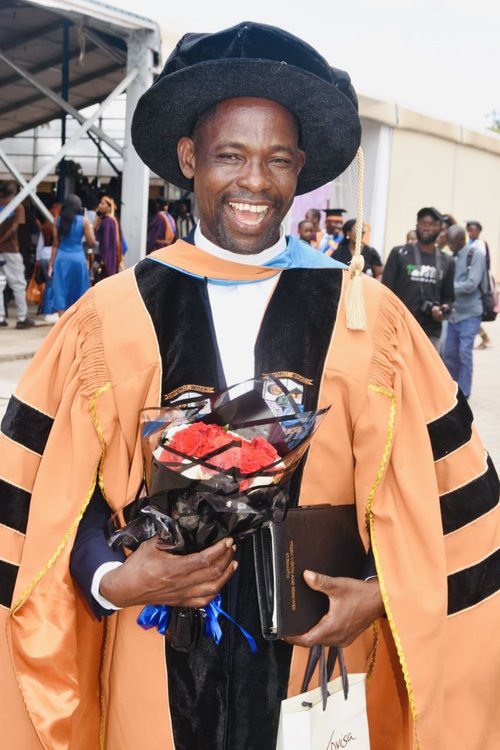
Last week, we received this letter from Dr Kalanga in the United Church of Zambia:
“I could not allow any more time to pass without expressing my deepest gratitude. It is with immense joy and profound thanksgiving that I inform you that I have successfully completed my Doctor of Philosophy (PhD) in Peace and Conflict Studies at the Copperbelt University, Zambia.
Looking back, I remain overwhelmed by your generosity, compassion and confidence in me during one of the most difficult periods of my life. At a time when I was facing significant financial challenges alongside demanding ministry responsibilities, the SALT scholarship became much more than financial assistance – it became a source of hope and encouragement. Your support enabled me to remain focused on my research and ultimately achieve what had long been my dream.
Today, I am pleased to tell you that your investment has indeed borne fruit.
My doctoral research examined The Role of the Church in National Reconciliation in Zambia, exploring how churches can contribute more effectively to peacebuilding, reconciliation, conflict transformation and social cohesion.
Dr Kalanga pursued his doctoral studies in the Dag Hammarskjöld Institute for Peace and Conflict Studies. His study sheds light on the prophetic and reconciling role of the Church in society, demonstrating how faith communities can and should serve as agents of peacebuilding, ethical leadership and social cohesion in times of political tension and national uncertainty. His PhD has since gained 'published recognition’ with two peer-reviewed publications appearing in respected journals.
It is wonderful to know that these programmes that the Methodist Church in Britain supported for so many years have had such a transformative impact upon the lives of so many individuals and upon the life of Methodist Churches across Africa. The legacy of those programmes lives on and Dr Kalanga's letter in a way represents them. He ends with the words:
“I remain personally indebted to all of you for investing in my academic journey and ministry. I sincerely hope that my work will, in some small way, honour the confidence you placed in me and contribute to the wider mission of the Church in promoting justice, peace and reconciliation.”