Just three years before Nazi troops stormed into Poland, sparking the most cataclysmic war in human history, a heroic Methodist minister and his congregation in London’s East End aided protestors clashing with the might of the British Union of Fascists (BUF).
The 90th anniversary of the famed Battle of Cable Street is marked this week, and as part of Black History Month in October, we look back on the lesser-known story of the Methodist Church’s assistance to protestors against the rising far-right movement.
In 1936 Oswald Mosley’s BUF was on the rise, inspired by fascist movements that had taken power in Europe – notably in Germany and Italy – and had thousands of members across the UK.
Calling for alliances with the fascist powers and espousing racist and antisemitic policies, the BUF planned to march with their infamous ‘Blackshirt’ supporters through London’s East End on 4 October.
Both fighting and peaceful protest ensued at various points, forcing police to reroute the fascist march through Cable Street.
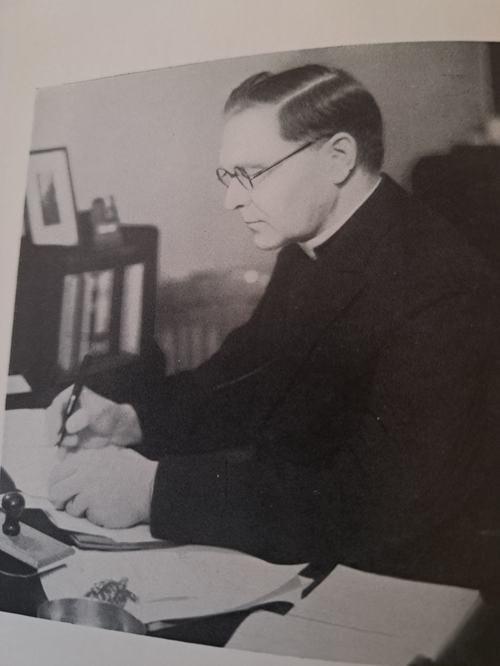
Members of St George’s Methodist Chapel on Cable Street, led by minister the Revd Percy Inneson, opened the church to the crowds fighting the Blackshirts, offering vital support and comfort.
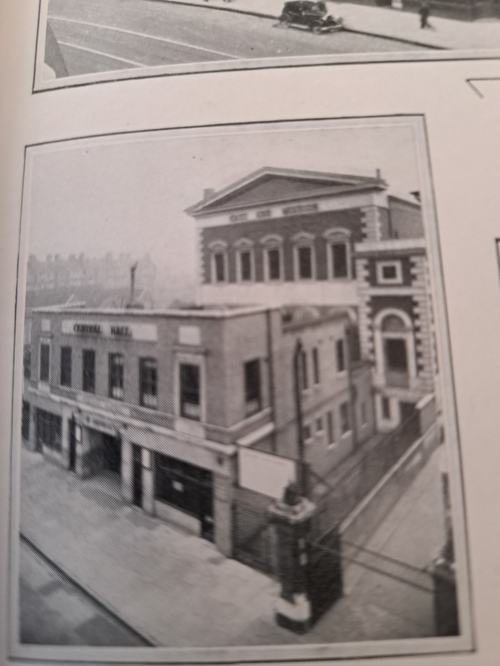
A formerly notorious sailor’s bar and then music hall, St George’s was bought by the East End mission in 1888 and had long offered sanctuary to struggling people, with a mission to combat the poverty in the East End. It was seen as a pillar of the local community.
Cable Street would prove to be the scene of the fiercest fighting and police told Mosley that the rest of his march could not go ahead.
A large mural depicting the battle was painted on the side of St George's Town Hall to commemorate the event. It is situated in Cable Street, about 350 metres east of the main barricade that stood by the junction with Christian Street.
With the Second World War raging, the BUF was made illegal by the British Government in 1940 and Mosely imprisoned.
Upon release in 1943, he found himself politically disgraced and moved abroad in 1951, spending most of the remainder of his life in Ireland and France – where he died in 1980.
The Methodist East End Mission remained open for nearly 70 years, including through the London Blitz. Throughout that time Methodists held meetings and Sunday Schools, campaigned against exploitation and gave support to the local community, particularly the needy children of the area.
The Cable Street chapel has since been renovated and has now returned to its roots as Wilton’s Music Hall – a well-known theatre.
John Singleton, local preacher in the Tower Hamlets Circuit, said the fight against the far right in the 1930s gives us pause for thought in today’s climate.
He said: “The Methodist Church in Tower Hamlets gives thanks for the prophetic witness of the East End Mission in 1936 as it stood with local people in opposing fascism and antisemitism.
“We are proud that the then-minister, the Revd Percy Inneson, opened the Cable Street church to offer hospitality to the crowds who were determined to stop the Blackshirts from marching through the area.
“We are sad that, 90 years later, in other parts of the country, there are still masked men in black, marching against migrants.
“Although the iconic church in Cable Street is no longer there, the justice-seeking witness of the Methodist Church in Tower Hamlets today remains the very antithesis of bigotry and repression.
“The church's social projects speak for themselves: the Whitechapel Mission serving homeless and rootless people; the Zacchaeus Project in Bethnal Green providing support for vulnerable adults; Band for Life in Bow, with its diverse musical family; and in Poplar, the amazing work of the Queen Victoria Seafarer's Rest in its port chaplaincy work and support for veterans and housing for homeless men. The spirit of resistance in 1936 lives on.”