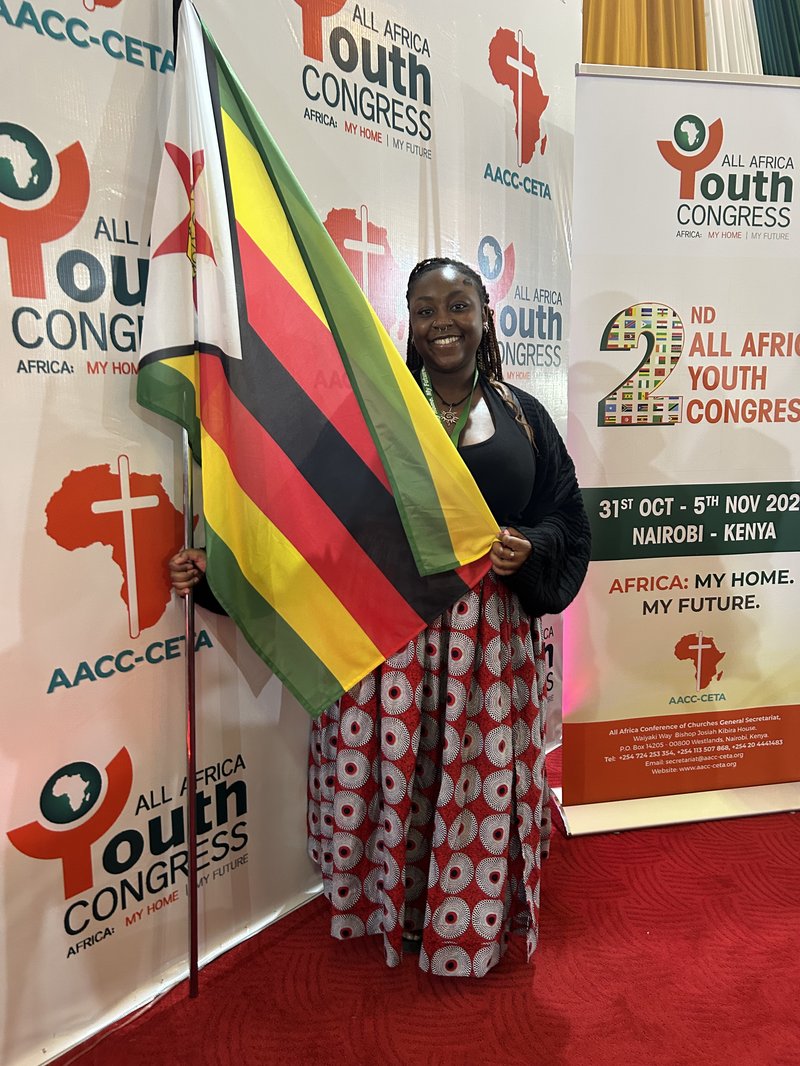
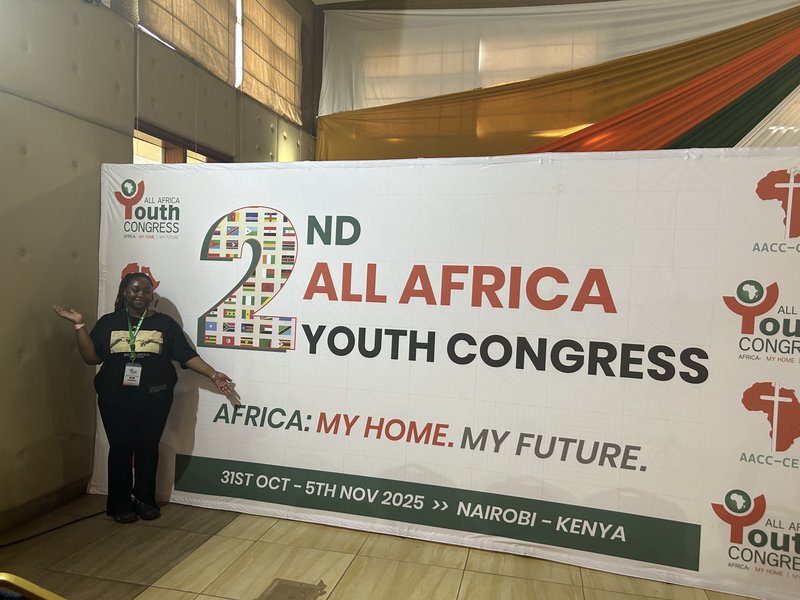
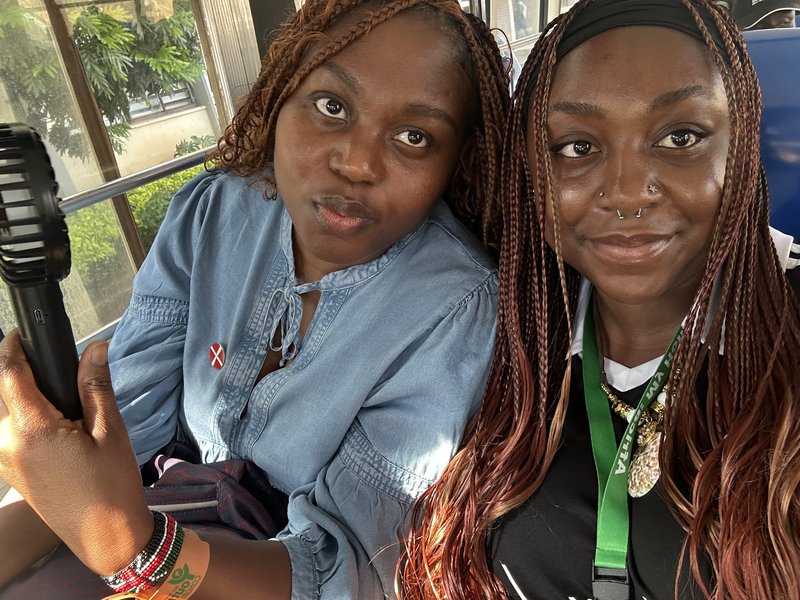
When Kunashe Chidziya and Revd Agnes Sam arrived at the All African Youth Congress (AAYC), they stepped into a space shaped by shared purpose, honest storytelling, and the energy of young people from nearly fifty African nations and diaspora communities. For the two representatives from the Methodist Church in Britain (MCB), the Congress was more than an event. It became a moment of recognition, disruption and deep learning.
The Joy of African Diversity
For 22-year-old former 3Generate Youth Rep Kunashe Chidziya, attending AAYC evoked joy and pride in her identity. She describes going in with no expectations and having a chance to reconnect with her Zimbabwean heritage and “celebrate the heritage and the issues” that shape African youth identity today.
Each night, different regions shared their distinct ways of worship and cultural expression. The rich diversity of Africa — too often flattened into a single narrative — unfolded with nuance and depth. Each language, rhythm and story highlighted that Africa cannot be contained in one version of itself.
Revd Agnes Sam, a minister from Southend and Leigh Circuit, echoed this insight: “You cannot put Africa in one box. You have to go in to learn, not stereotype.”
This celebration of difference was more than cultural expression; it was a theological statement — a witness to the expansive, inclusive body of Christ.
A window into African Youth Realities
What struck both Agnes and Kunashe was the courage with which young Africans spoke about the issues affecting their lives. There was no avoidance, no softening — only honesty, faith and determination.
For Kunashe, two crises stood out sharply: gender-based violence and human trafficking. She reflected on watching a film about trafficking: “Seeing the impact — the health, the violence they endure — it stays with you.” She named a hard truth: “If we don’t make opportunities at home… young people search for hope in danger.”
Agnes’ conversations broadened this picture, revealing how economic injustice, climate change, political instability and migration pressures intertwine. Many young Africans felt pushed — not pulled — into leaving their countries. “People risk trafficking, dangerous routes, losing lives… because they feel they have no choice.”
These stories were not spoken in despair but with clarity. These young leaders were not helpless — they were prophetic.
A Church That Looks Like God’s World
Both representatives saw the Congress as a compelling model of what it means to be a growing, inclusive, evangelistic, justice seeking Church.
Inclusivity was embodied in the gathering’s blend of denominations, languages and worship styles. Justice resounded through discussions about climate justice, governance and youth empowerment.
Agnes found the ecumenical unity especially powerful: “When churches come together, our voice is stronger — especially for climate justice and the most vulnerable.”
For Kunashe, the Congress reinforced the importance of youth voice: “Just because you’re young doesn’t mean you don’t have wisdom. Youth have the blessing of time to make change.”
The Congress didn’t simply welcome young people — it trusted them to lead. Both representatives agreed this was one of its greatest strengths.
Ministry Reimagined
Witnessing youth-led worship, planning and advocacy reshaped how both representatives understood ministry.
Agnes returned with a sharper question for her context in Britain: Are we giving young people genuine space to speak about what they face? “We like to do things for young people,” she said, “but we need to sit down, listen, and let them express themselves.”
For Kunashe, the experience ignited a new sense of courage and responsibility: “Now there’s a duty to speak [about youth experience] — even if people won’t listen, you don’t know who you’ll reach.”
And she offered a challenge to the wider Church: “Treat us as adults. Give us opportunities and we’ll do amazing things.”
The Gift: Resilience and Joy in the Midst of Struggle
Despite stories of conflict, political tension and unemployment, both representatives were struck by the joy and resilience of those they met.
Agnes recalled: “Even when things were difficult, people didn’t moan — they celebrated. We need to learn from that.”
Joy became a form of resistance — a commitment to hope.
Relationships formed at the Congress continue, with young people from Uganda, Zimbabwe, Togo, Nigeria and beyond still messaging, praying together and sharing updates across borders. A living example of global relationship in real time.
The Challenge to the Methodist Church in Britain
The story Agnes and Kunashe bring home is not one of pity, but of partnership — not of charity, but of shared liberation.
Their reflections call the Church to:
- listen more deeply
- trust young leaders more boldly
- celebrate cultural diversity more fully
- speak out more courageously
- join hands across borders more intentionally
As Kunashe said: “Our countries divide us, our geography divides us — but we are connected.”
And in connections like we are reminded that our calling comes alive more fully when we live as a truly worldwide Church.
The All African Youth Congress is an initiative of All African Conference of Churches (AACC), a pan-African ecumenical network. It aims to inspire and empower African youth to positively transform Africa’s narrative and champion the continent’s sustainable development. The Methodist Church in Britain were invited to participate in the initiative due to our longstanding partnership with AACC.