Worship is giving thanks and praise to God with joy.
We celebrate who God is and what God has done, in the power of the Holy Spirit.
Worship happens in church services – formal or informal – but also in everyday life when we spend time with God or serve others in love.
The sacraments
Sacraments are special signs that show what God has done for the world through Jesus Christ.
One way of describing sacraments is to say that they are ‘outward and visible signs of an inward and spiritual grace’. They use physical signs like water, bread and wine, but what really matters is the grace of God that we encounter through them.
The Methodist Church recognises two sacraments: Baptism and the Lord’s Supper.
Baptism shows God’s grace and forgiveness, and places us in God’s family. It may be given to infants, with faith to come later, or to young people and adults who already trust in Jesus.
The Lord’s Supper is also called Holy Communion or the Eucharist. In this meal, Jesus is present with his people. Together as God’s people, we give thanks over bread and wine, and pray that through the Holy Spirit they will be for us the body and blood of Christ.
As we share the bread and wine, we remember Jesus’ death and resurrection, and give thanks. The Lord’s Supper recalls Jesus’ last meal with his friends, and gives us a taste of the feast to come in God’s kingdom.
Other elements of worship
Some of the things that shape Methodist worship include:
- Hymns and songs – Methodists are known as a singing people. From Charles Wesley’s thousands of hymns – written hundreds of years ago when Methodism first began – to today’s wide range of music, singing helps us learn, pray and celebrate together.
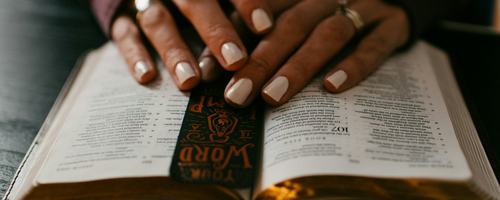
- Preaching and Scripture – The reading and preaching of the Bible is central. Methodists expect the Spirit to speak through the Bible.
- Prayer – Methodist worship is soaked in prayer, from traditional written prayers to extempore (free) prayer, giving thanks, asking and listening to God.
Styles of worship
Methodist worship today is very varied.
Some churches have robed choirs, pipe organs, and formal liturgy (structured prayers and readings pre-written for group contexts). Others gather with guitars, drums, and a more relaxed style. Some worship is quiet and reflective; other services are lively and joyful. In every style, the purpose is the same: to give glory to God and to draw people into God’s presence.
The Covenant Service
Renewing our commitment
Each year Methodists gather for the Covenant Service. It is one of the most distinctive traditions in our Church. At its heart is the Covenant Prayer, in which we offer ourselves to God again, asking that our whole lives may be shaped by his love and will.
Where it began
John Wesley, founder of Methodism, introduced the Covenant Service in the 1700s to help people take their Christian life following God seriously. He wanted Methodists to renew their promises to God regularly, not just once in a lifetime. Since then, the service has become part of our annual rhythm - often held at the start of a new year.
The Covenant Prayer
The prayer is simple but challenging. We remind ourselves that our lives are not our own, but belong to God. We promise to be ready for whatever God asks –whether that is easy or hard, joyful or costly.
Contemporary version
I am no longer my own but yours.
Your will, not mine, be done in all things, wherever you may place me, in all that I do and in all that I may endure; when there is work for me and when there is none; when I am troubled and when I am at peace.
Your will be done when I am valued and when I am disregarded; when I find fulfilment and when it is lacking; when I have all things, and when I have nothing.
I willingly offer all I have and am to serve you, as and where you choose. Glorious and blessèd God, Father, Son and Holy Spirit, you are mine and I am yours.
May it be so for ever.
Let this covenant now made on earth be fulfilled in heaven.
Amen.
Traditional version
I am no longer my own but yours.
Put me to what you will, rank me with whom you will; put me to doing, put me to suffering; let me be employed for you or laid aside for you, exalted for you or brought low for you; let me be full, let me be empty, let me have all things, let me have nothing; I freely and wholeheartedly yield all things to your pleasure and disposal.
And now, glorious and blessèd God, Father, Son and Holy Spirit, you are mine and I am yours. So be it. And the covenant now made on earth, let it be ratified in heaven.
Amen.
In this traditional form, the words, “Put me to doing, put me to suffering”, have raised difficulties for some people. These words do not mean that we ask God to make us suffer, but rather that we desire, by God's help, actively to do or patiently to accept whatever is God's will for us.
A service of grace
The Covenant Service is not about trying harder to impress God. It ends with Holy Communion (see above), reminding us that we live by God’s grace. As we share bread and wine, we remember that God's love comes with no strings attached. The Covenant Prayer is our response to God’s grace: a willing "yes" to God's love and call. We pray that the Holy Spirit will continue to shape us in that love.
The Covenant Service helps us to pause, take stock, and renew our faith. It challenges us to live more fully for Christ, and reassures us that whatever lies ahead, God’s love will hold us.
Singing the Faith
Methodists are sometimes called “a singing people.”
From the very beginning, hymns have been at the heart of our worship and our discipleship.
Charles Wesley, brother of John Wesley, wrote thousands of hymns that helped ordinary people learn and live the Christian faith. These hymns were like sermons in song – teaching theology, telling the story of Jesus, and shaping the lives of those who sang them.
Singing has always been important for Methodists because it involves the whole person: body, mind and spirit. When we sing, we remember and celebrate, we pray and proclaim, we grieve and we rejoice. Hymns carry the faith into our hearts and onto our lips.
Today, the official hymn book of the Methodist Church in Britain is called Singing the Faith. It brings together the best of the old and the new – Charles Wesley’s hymns alongside newer songs of worship, global voices, and songs that speak to the challenges of our world today.
Singing the Faith is more than a book: it’s a reminder that we keep learning, growing, and expressing our faith in song, together as a community.
For Methodists, singing is not just an extra to worship – it is one of the ways we sing our faith into being, joining with one another and with the whole Church through time and across the world.