What we heard in numbers
The heart of this listening is in people's words. But numbers help show the shape of it – how many people we heard from, and what our own research found. Here are the figures that matter most, in plain terms.
Every chart below has a written description, so it makes sense whether or not you can see the image.
How we listened
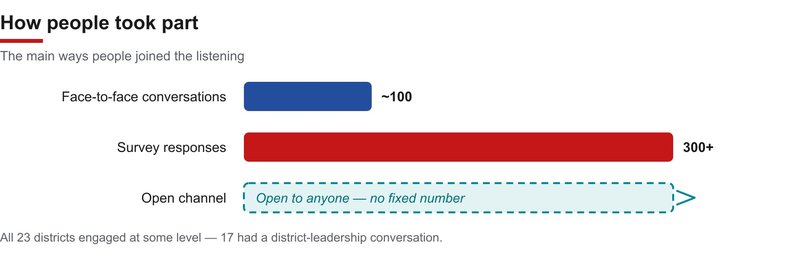
- Around 100 people spoke with us face to face.
- More than 300 people answered our surveys.
- All 23 districts took part in some way – 17 through a direct conversation, and the rest through other routes.
The three surveys
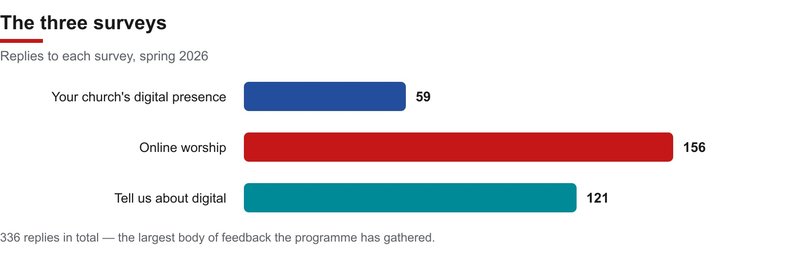
People answered three surveys over the spring:
- Your church's digital presence – 59 replies
- Online worship – 156 replies
- Tell us about digital (an open, anytime survey) – 121 replies
That is 336 replies in total – the largest body of feedback the programme has gathered.
How the Church appears online
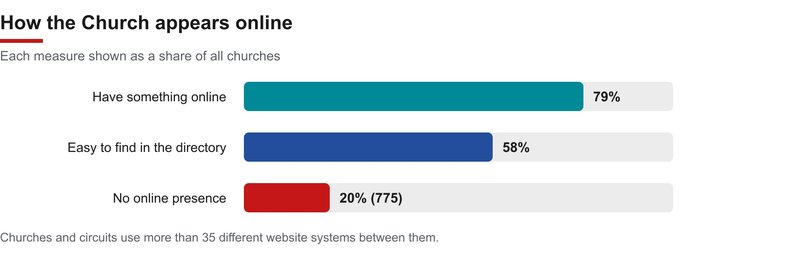
We checked how every church shows up to someone searching online.
- About 8 in 10 churches have some kind of web presence.
- But only about 6 in 10 can be reliably found through the Church's own "Find a Church" directory.
- About 1 in 5 churches – around 775 – have no online presence at all. For someone searching for them, they are invisible.
- Churches and circuits use more than 35 different website systems between them, with little in common.
Worship online
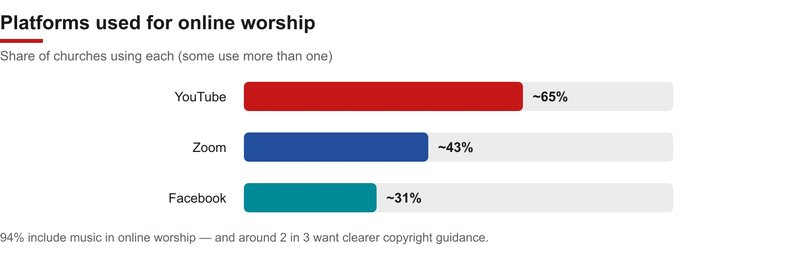
Many churches have taken worship online, and they told us how.
- YouTube is the most used platform (around 65%), followed by Zoom (around 43%) and Facebook (around 31%).
- Around 94% include music in their online worship – singing is central to how Methodists worship together.
- But around two in three churches are not fully confident about the copyright rules for music online, and clear guidance was their top request.
The data behind "the church on our screens"
One finding sits underneath several of the themes. We do hold sound records: one that local churches, circuits and districts keep themselves and a central, connexional record. What we cannot yet do is bring them together into a single, joined-up picture, because they were built separately over many years and were never designed to line up. The most visible result is our public directory, Find a Church, which came through a different source again and isn't yet linked to the records behind it.
This is not anyone's failing. But it does mean that joining our records up – so what the public sees matches what we hold – is one of the most important foundations for everything else.