Sharing Spaces and Sharing Faith
When you share a space with someone well in any context it can lead to a better understanding of each other, and to genuine friendships. Naturally, this can create a sympathy and curiosity about what is important to each other, and a genuine desire to understand more.
This should go both ways!
As Christians who are spirit-filled, we should be inspired to develop relationships with those around us and show love, care and welcome. We should be authentic in our welcome; we do this because we are people of faith, not just because we are trying to get something from people who use our buildings! However, if we do this well we can create a safe space, where people feel that they can explore what it means to be part of church family.
We should always seek to share and collaborate with those who use our buildings – it strengthens everyone and can make for a happier and more unified community. Here are some ways that your church can share its space generously and seek to collaborate well with its guests.
Celebrate Each Other
Always take time to celebrate each other’s successes, and the fruits of these conversations. Here are some quick ideas to get you started:
- “Good News” notice boards, where groups are encouraged to celebrate success.
- Could the congregation send a congratulations card to a group?
- Take time in your Sunday services to share the good news from the groups and pray for them where appropriate.
If you want to be more ambitious, you could think about events centred around your other building users. For example, one church held a community open morning, giving each user group the opportunity to have a stall and promote their offering. This enabled everyone to find out about one another’s groups, including church-run activities.
Inviting People to be Part of Church Life
Inviting groups to be involved in the seasons of church life can be another way to create a sense of belonging.
For example, at Christmas, churches have had great results from holding Christmas tree festival to coincide with their town’s Christmas market. Each group was invited to decorate a tree and visit the resulting exhibition. Alternatively, if a church hosted a choir they could be asked to sing at the carol service. A Christmas tree can become a prayer tree where visitors are invited to add hopes, concerns or thanksgivings. The same tree might become something else at Easter time, or Harvest time… the opportunities are endless.
The opportunity for playful sharing does not have to be limited to special times of the year. Methodist churches have undertaken shared fundraising challenges, asked building users to knit blanket squares and had user groups adopt a knitted animal from Noah’s Ark. These have provided opportunities to connect through engaging people’s sense of fun. For maximum impact, these have been combined with a visit to each group or an invitation to a church service where the creative project was featured.
Case study
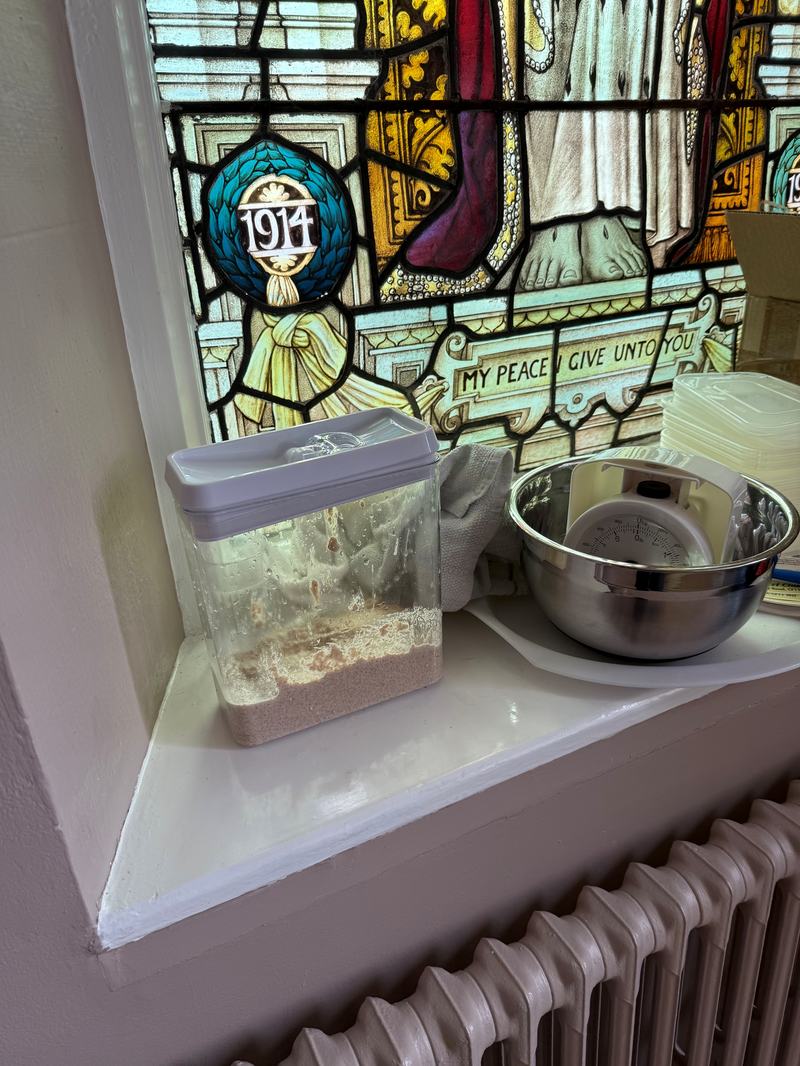
For a particularly creative idea, check out what Conway Methodist Church, Cardiff got up to with a sourdough starter named Bob!
Church shaped by building users
Building users may accept an invitation to a church service, but an opportunity for gathered worship tailored to their particular interests, or church activities that are particularly newcomer-friendly might offer a lower barrier-to-entry for building users. Inviting toddler group families to Messy Church or coffee morning regulars to café church are obvious examples. Are there New Places for New People in your Circuit? What might it look like to signpost to these where appropriate?
Connecting through shared mission
A more radical approach is to notice and affirm the different ways in which building user groups contribute, alongside the church, to the good of the community. Bringing together all the groups serving the community, public sector services as well as charities and community organisations, can create a powerful sense of shared mission. Through the practices of Faith-Rooted Community Organising, churches can bring people in the community together to build power for positive change.