Risk assessments and action plans should remain a priority. As children's, youth and family workers we still need to show responsibility and remain vigilant in our duty of care.
From 20 January 2022, face coverings are no longer compulsory in the youth sector for any ages, in any setting. Masks can, of course, still be worn by choice and all practice should remain Covid secure.
Other things to consider
- Remember to keep reviewing your risk assessment and risk management plan and, in particular maintain high standards of hygiene (especially hand washing/sanitiser), regular and thorough cleaning of venues and equipment.
- Give particular consideration in your risk assessment/management to children, young people and adults (including leaders) in your group who have specific health conditions or who may be more vulnerable than others. This includes 'invisible' conditions such as asthma.
- Consider still using social distancing measures in poorly ventilated rooms to help manage risk.
- While there is no limit on how many people can now meet indoors, you still need to consider what would happen regarding the need to self-isolate if someone in your group tested positive.
- Take every opportunity to wipe down shared equipment (such as sports gear, craft supplies) as often as you can between use.
- Don't forget that lateral flow tests are now more readily available. Consider building regular testing of workers and volunteers into your risk management. If you require a large number of test kits make sure you give your local test centre plenty of notice (a few weeks). You can also contact NHS Test and Trace for help.
- If someone from your group tests positive for Covid-19 they will have to isolate in line with Government guidance. Anyone who has recently been in 'close proximity' with this individual will also have to test and isolate. Seek advice from NHS test and trace if you are unsure on what action you need to take.
- Private dwellings must not be used to meet for youth activities in any circumstance – including gardens.
- See our page on residentials for guidance on staying overnight.
- For further help, visit the Methodist Coronavirus Guidance for Property pages and, in particular the Guide to managing your church property. You can also find a Word version of an action plan and this risk assessment template on the Coronavirus Guidance page.
- Further templates for risk assessments, action plans and other documents are available from the Youth Work Support website.
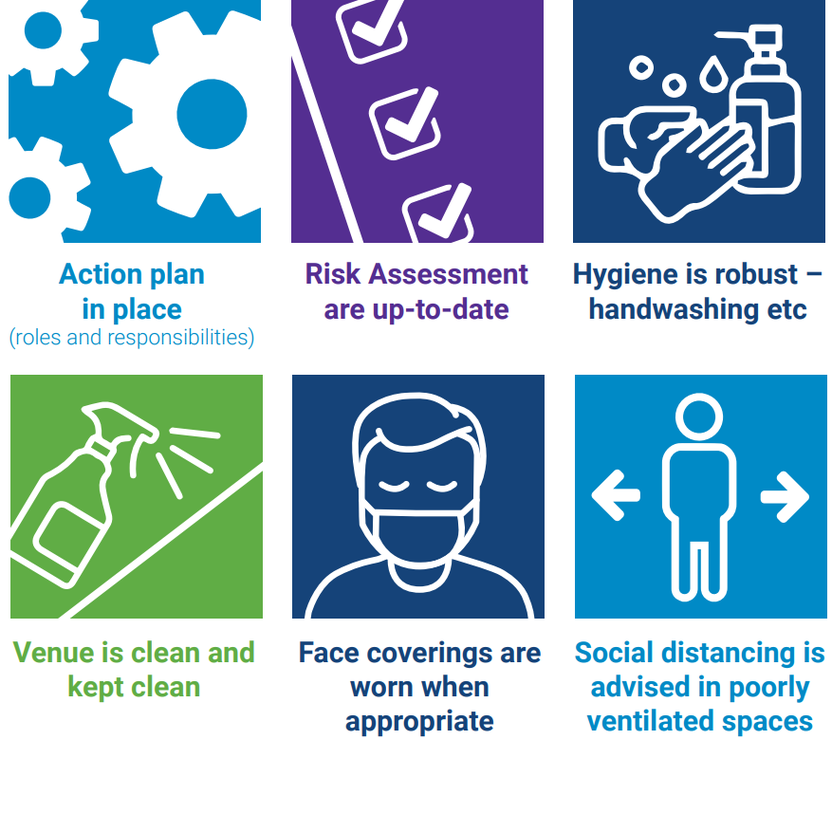
Infographic from the National Youth Agency.